Dungeons & Dragons: Shadow over Mystara for Arcade 3D
Arcade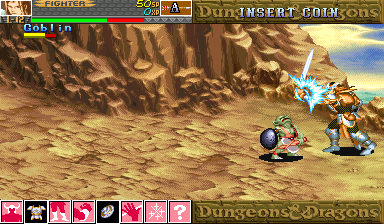
Game controls in browser
Show Controller & SystemClick on play Arcade game now button first to load the game into the emulator. Before the start do not forget to toss the coin first (key 1) into the machine slot. Arcade controls:
Dungeons & Dragons: Shadow over Mystara
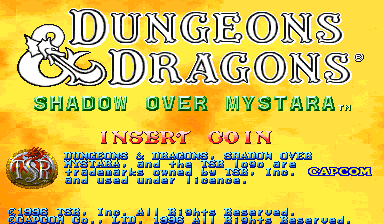
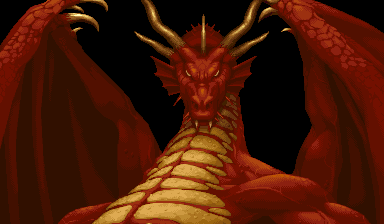
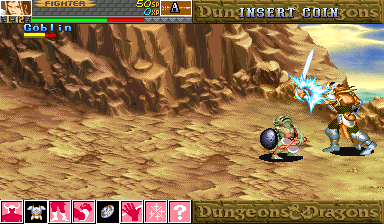
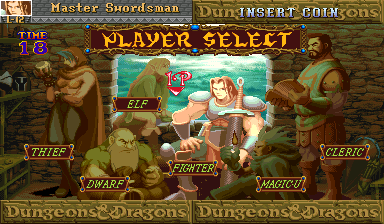
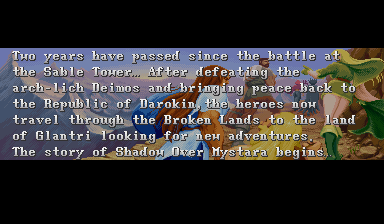
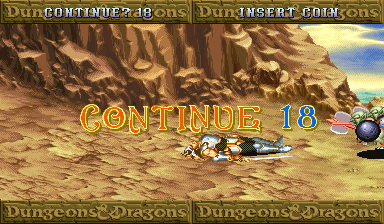
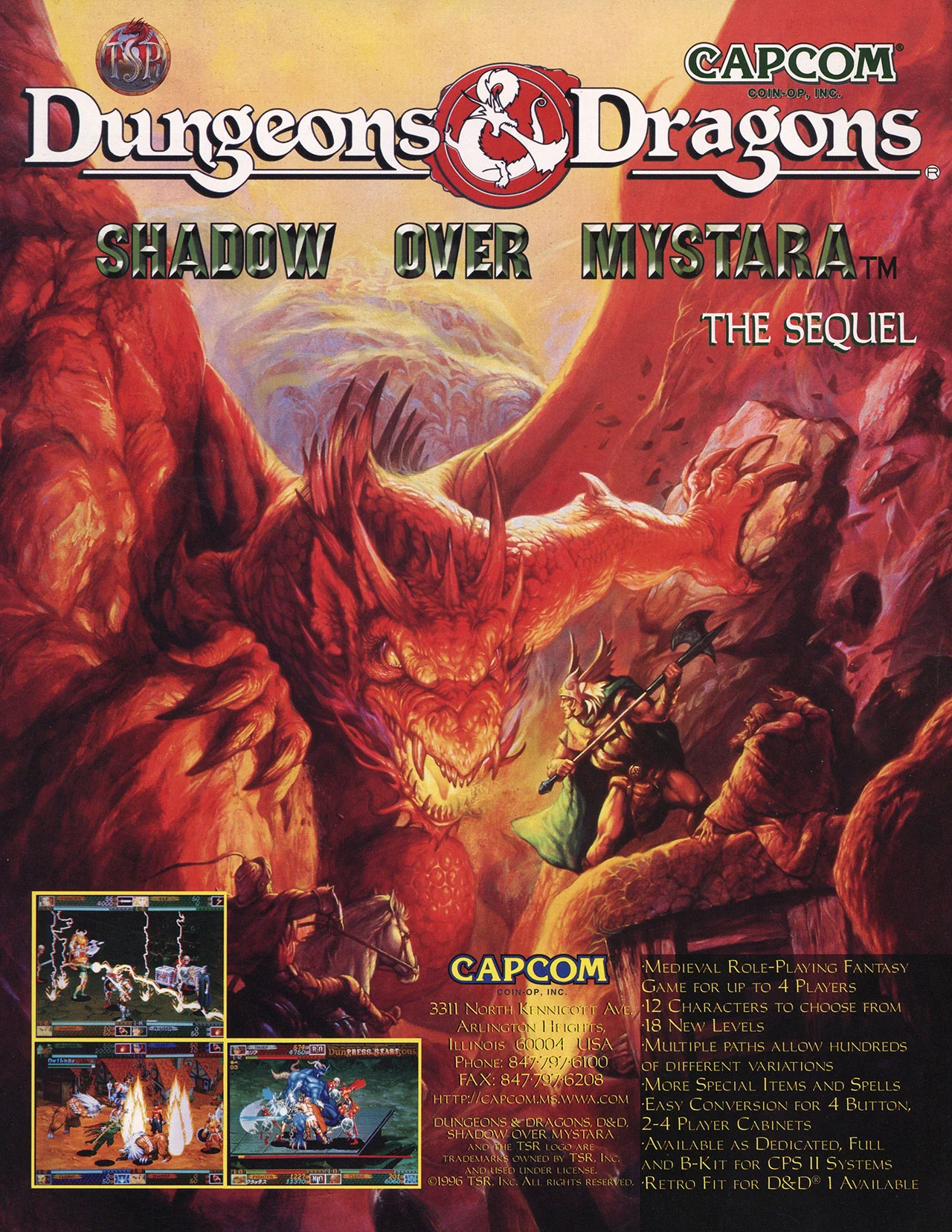
Online version of Dungeons & Dragons: Shadow over Mystara for Arcade. An arcade beat-em-up with which Capcom followed Tower of Doom in 1996, again on its CPS2 board and under the Dungeons & Dragons licence. Up to 4 players leave the Republic of Darokin through the Broken Lands for Glantri and gradually uncover the plans of the sorceress Synn. The fighter, cleric, elf and dwarf are joined by a thief and a magic-user, and the heroes gain experience and levels, learn spells, shop in towns and watch their magic gear wear out. Forks in the road and several endings make sure one run never shows everything...
Game details
Other platforms online
Dungeons & Dragons: Shadow over Mystara is currently playable only in version for Arcade.rating (0 users voted)
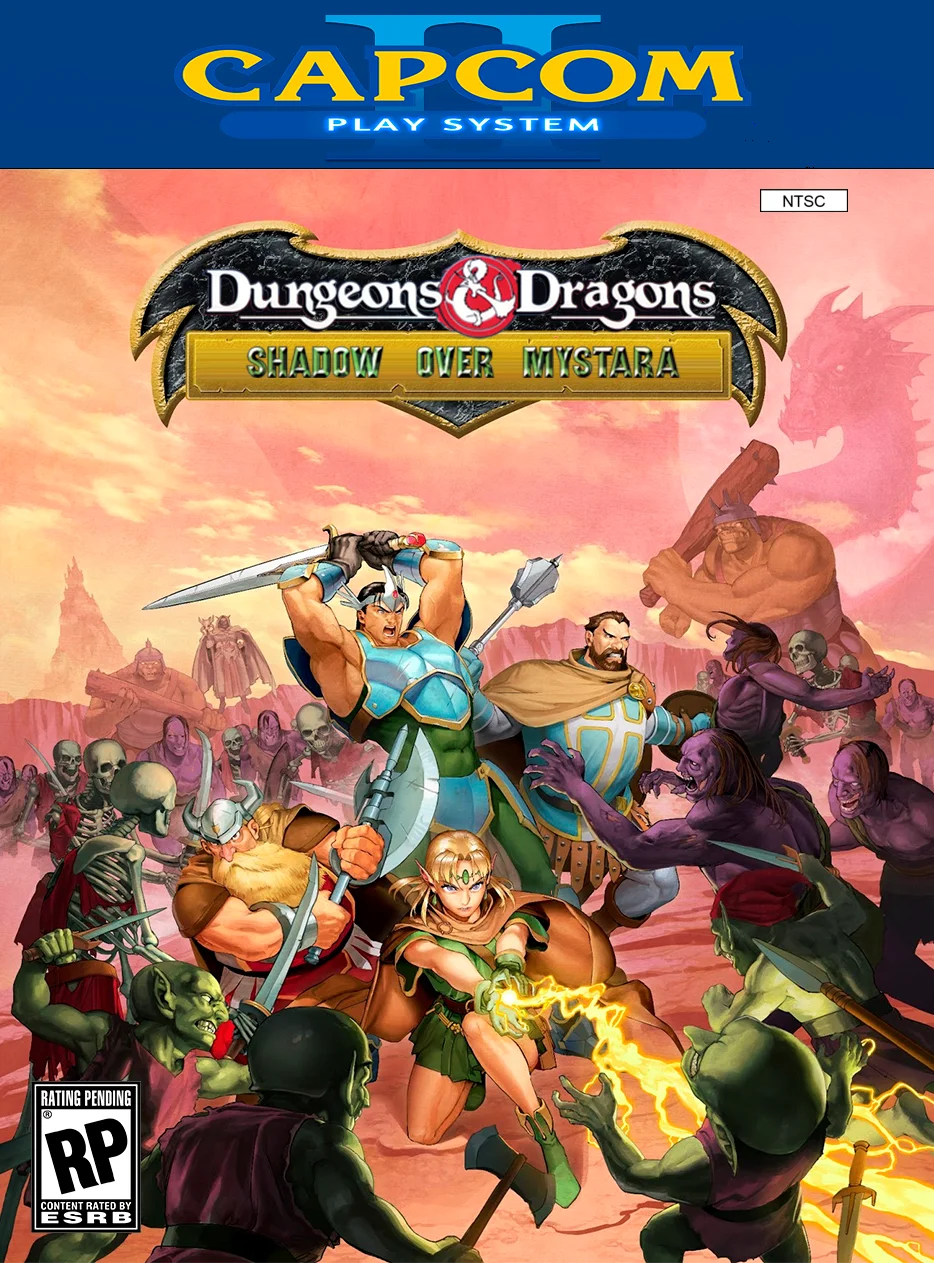
Covers - Box Art
Arcade game
Online emulated version of Dungeons & Dragons: Shadow over Mystara was originally developed as arcade game or coin-op game,
a coin-operated entertainment machine typically installed in public businesses such as restaurants, bars and amusement arcades. Most arcade games are video games,
pinball machines, electro-mechanical games, redemption games or merchandisers. While exact dates are debated, the golden age of arcade video games is usually defined
as a period beginning sometime in the late 1970s and ending sometime in the mid-1980s.
Virtually all modern arcade games (other than the very traditional Midway-type games at county fairs) make extensive use of solid state electronics,
integrated circuits and cathode-ray tube screens. In the past, coin-operated arcade video games generally used custom per-game hardware often with multiple CPUs,
highly specialized sound and graphics chips, and the latest in expensive computer graphics display technology. This allowed arcade system boards to produce
more complex graphics and sound than what was then possible on video game consoles or personal computers, which is no longer the case in the 2010s.
This emulation is powered by MAME (Multiple Arcade Machine Emulator) project, an open-source emulator designed to recreate the hardware of arcade game systems in software on modern personal computers and other platforms. Its intention is to preserve gaming history by preventing vintage games from being lost or forgotten.