HardBall 5 (Demo) for PC DOS 3D
PC DOS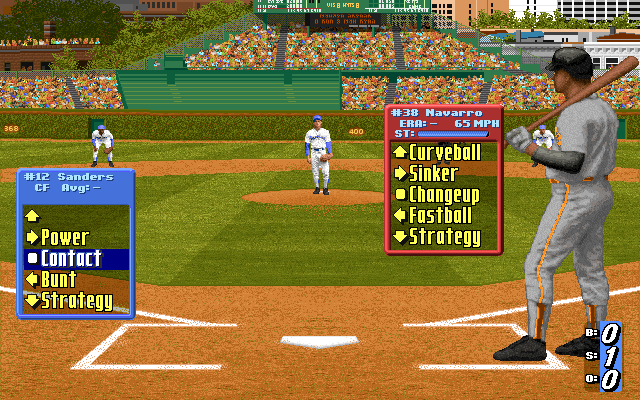
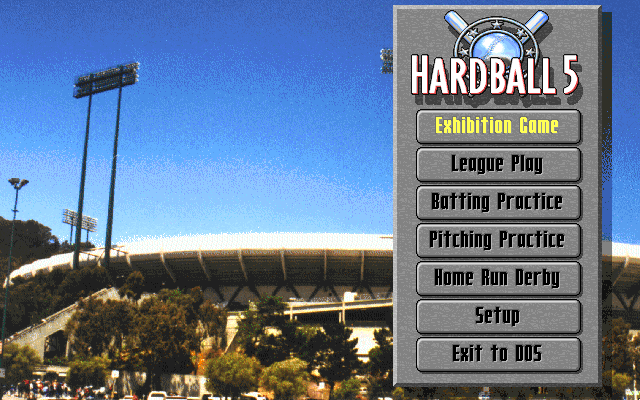
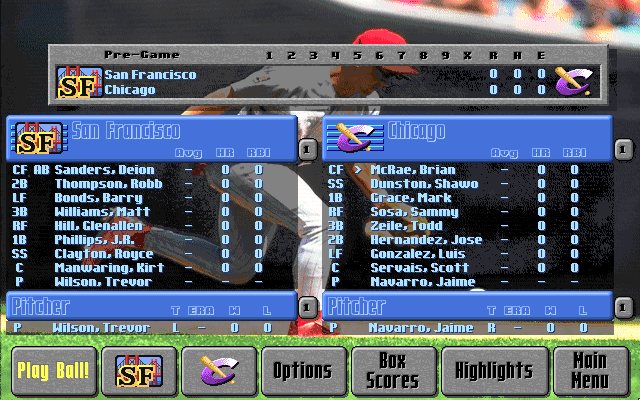
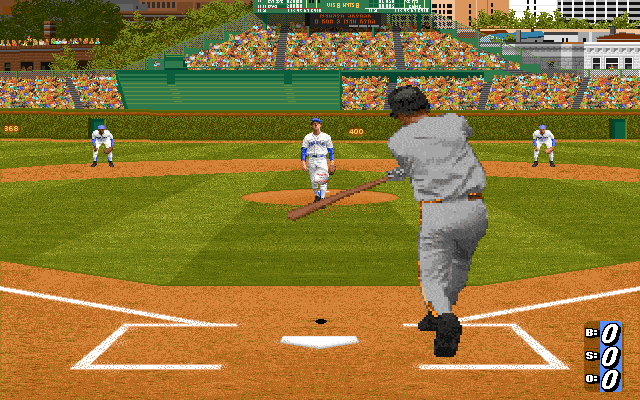
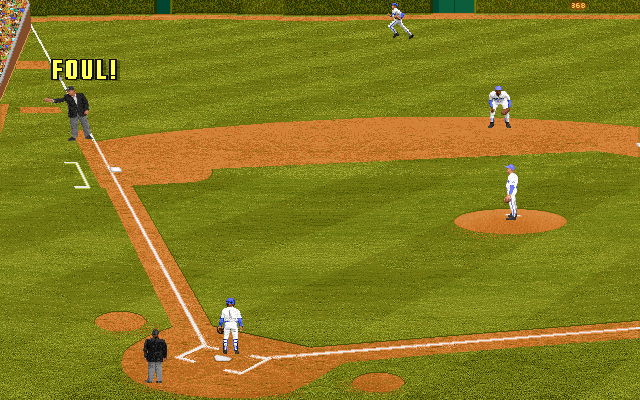
The menus and the lineup screen are used with the mouse: Exhibition Game and then Play Ball! start an All-Stars match of the American League against the National League. In Options a click on a team's icon switches between Keyboard 1, Keyboard 2 and Computer. By default the American League plays on Keyboard 1 and the National League is the computer.
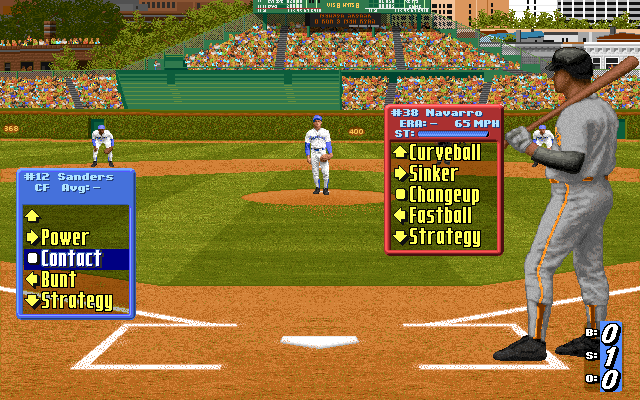
The batter picks a Contact swing with Enter and swings with a second Enter once the ball is on its way. The pitcher picks a pitch with Enter and throws by holding Enter. Keyboard 1 plays on the arrows or the numeric keypad, Keyboard 2 on A, W, D and X, and Backspace dives for the ball and steals a base. The demo lasts two innings.
Game controls in browser
Show Controller & SystemClick on play DOS game now button first to load the game and run it inside the DOSBox emulator.
Manuals, maps & hints 2
Original manuals, maps, hints and other materials for HardBall 5, on OldGames.sk:
HardBall 5
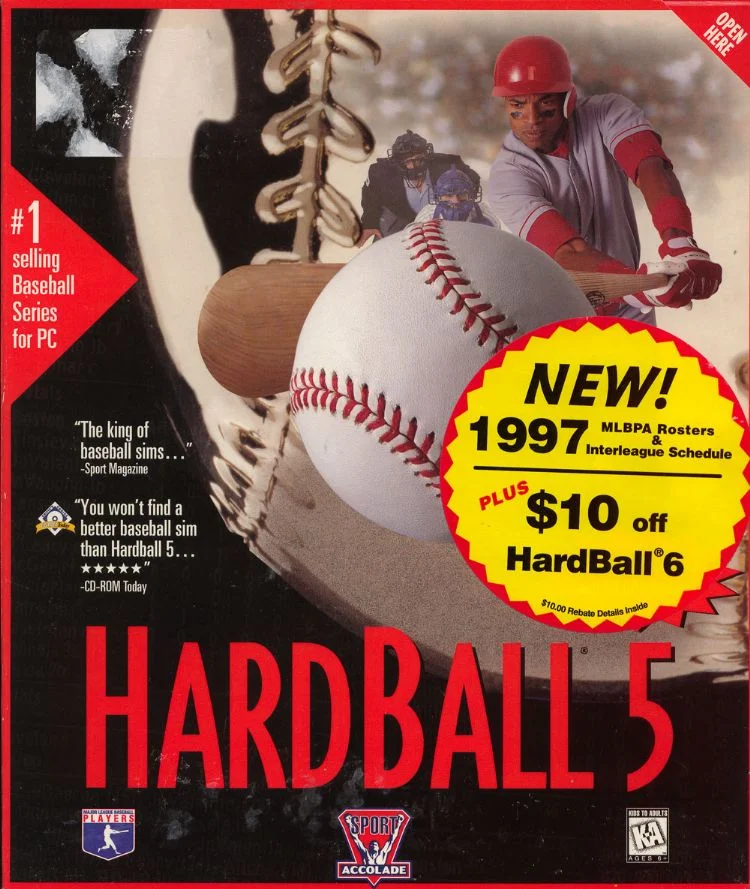
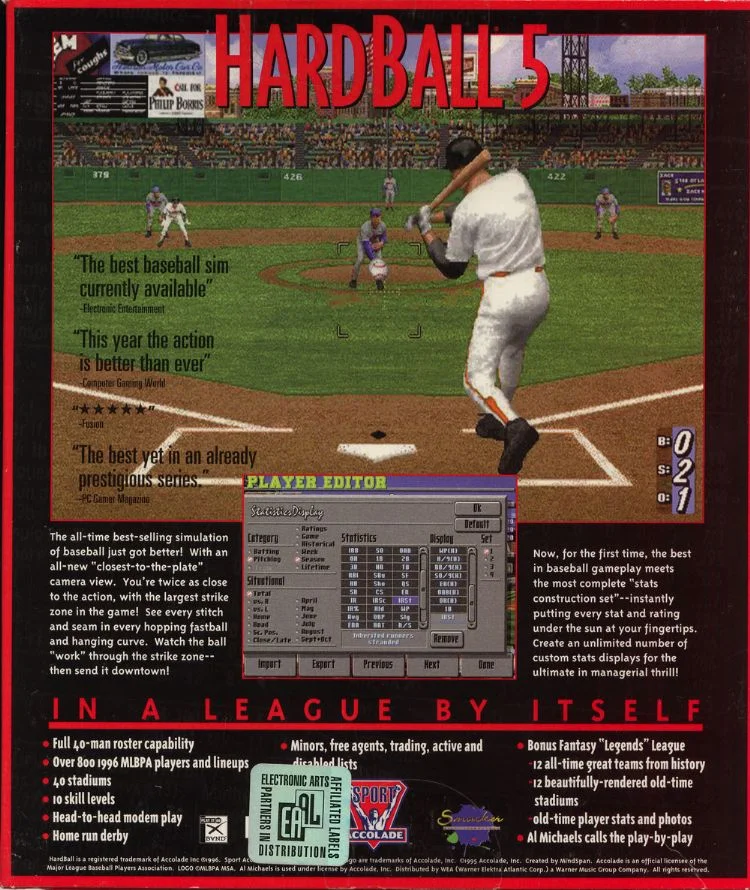
Online version of HardBall 5 for PC DOS. A baseball game developed by MindSpan for Accolade, released in 1995 first for the Sega Genesis and in October for PC DOS on CD-ROM. The fifth HardBall carries the licence of the players' association MLBPA with more than 800 real players, plus a bonus Legends league of 12 famous teams from history. The game can be watched from behind the pitcher like a TV broadcast, with Al Michaels calling the game, and each of the 41 ballparks has adjustable wind, temperature and humidity. There are exhibition games and a league with playoffs, practice modes and a home run derby, and 2 players can also meet over a modem.
Game details

Other platforms online 1
You can play HardBall 5 online also in a versions forrating (0 users voted)
Covers - Box Art
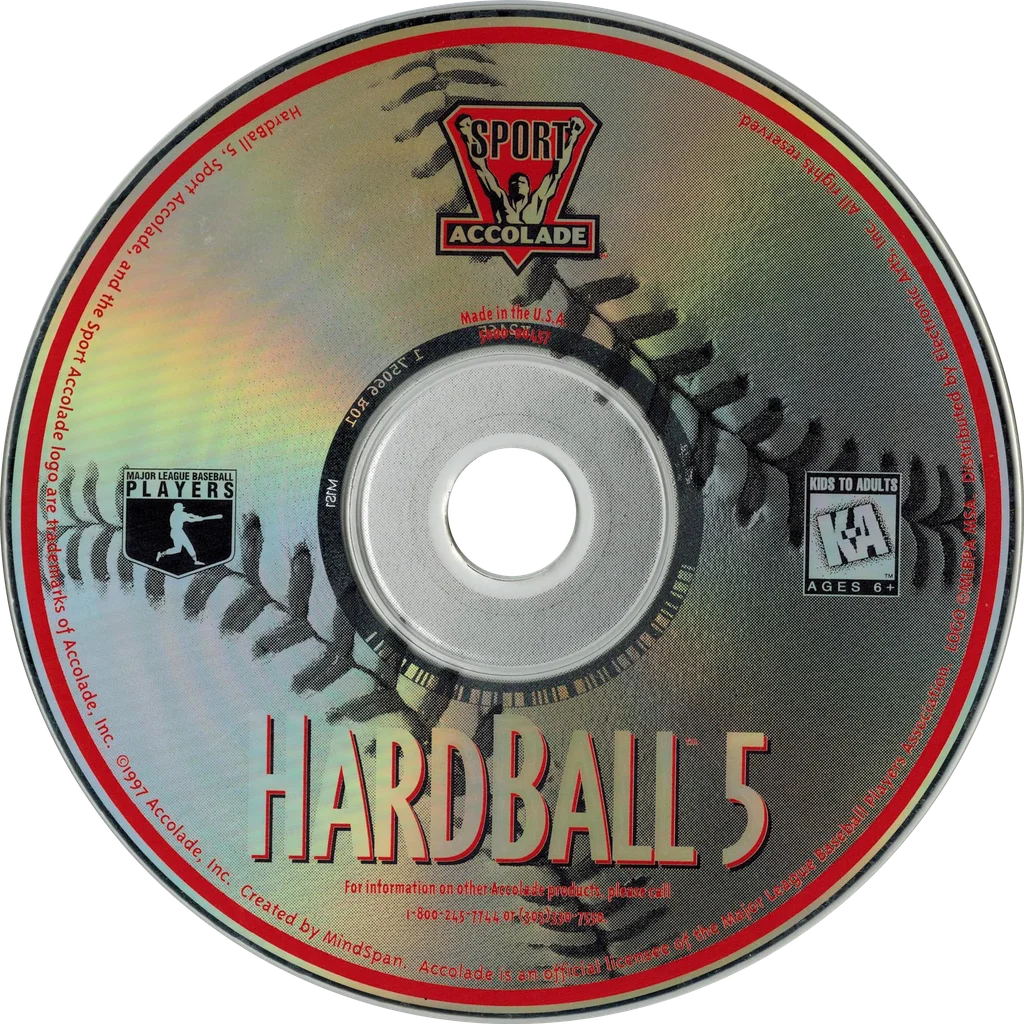

IBM PC with MS-DOS
Online emulated version of HardBall 5 was originally developed for the IBM PC and compatible computers,
with MS DOS - Microsoft Disk Operating System. It is an OS for x86-based personal computers mostly developed by Microsoft and released in 1981 as PC DOS 1.0.
MS-DOS was targeted at Intel 8086 processors running on computer hardware using floppy disks to store and access not only the operating system, but application software and user data as well.
Progressive version releases delivered support for other mass storage media in ever greater sizes and formats, along with added feature support for newer processors
and rapidly evolving computer architectures. Ultimately, it was the key product in Microsoft's development from a programming language company to a diverse software
development firm, providing the company with essential revenue and marketing resources. It was also the underlying basic operating system on which early versions of Windows ran as a GUI.