HardBall III for PC DOS 3D
PC DOS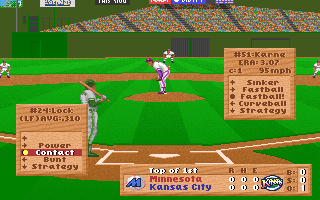
Before a game the program asks for a code wheel number: any number, or just Enter, will do.
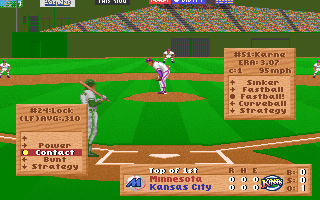
At bat, numeric keypad: Enter Contact, 6 + Enter Power, 4 + Enter Bunt, 2 + Enter Strategy. Digits 1 to 9 aim at the strike zones (laid out as on the keypad), Enter swings. Esc opens the line-up, R shows a replay.
Game controls in browser
Show Controller & SystemClick on play DOS game now button first to load the game and run it inside the DOSBox emulator.
Manuals, maps & hints 3
Original manuals, maps, hints and other materials for HardBall III, on OldGames.sk:
HardBall III
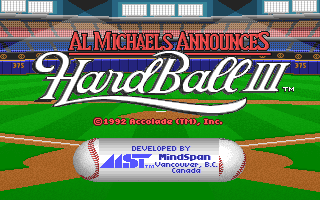
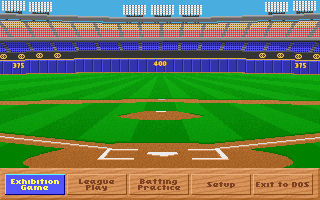
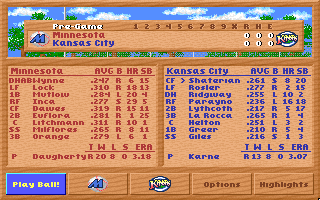
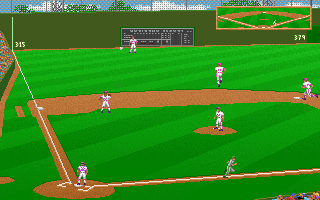
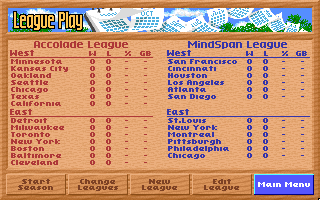
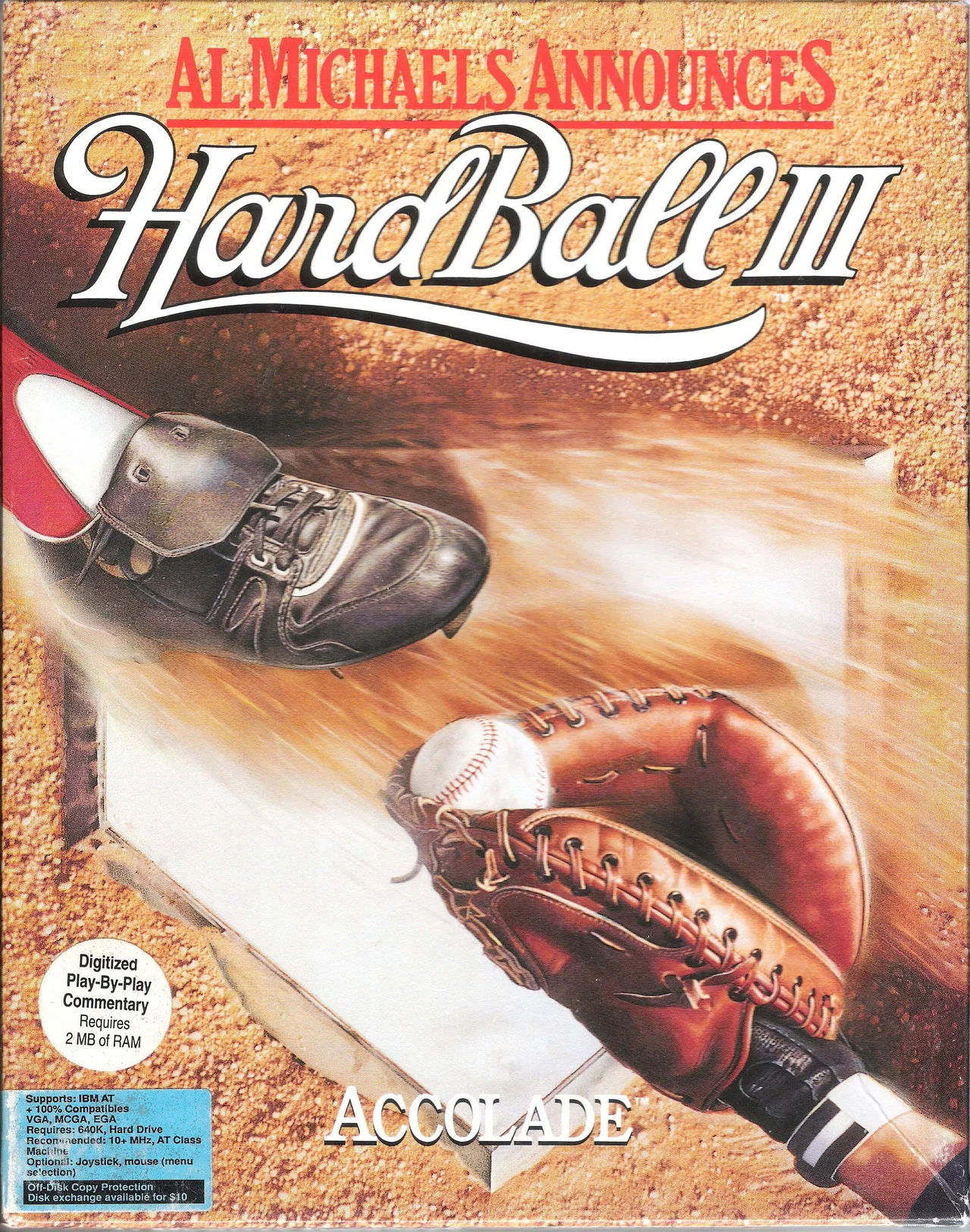
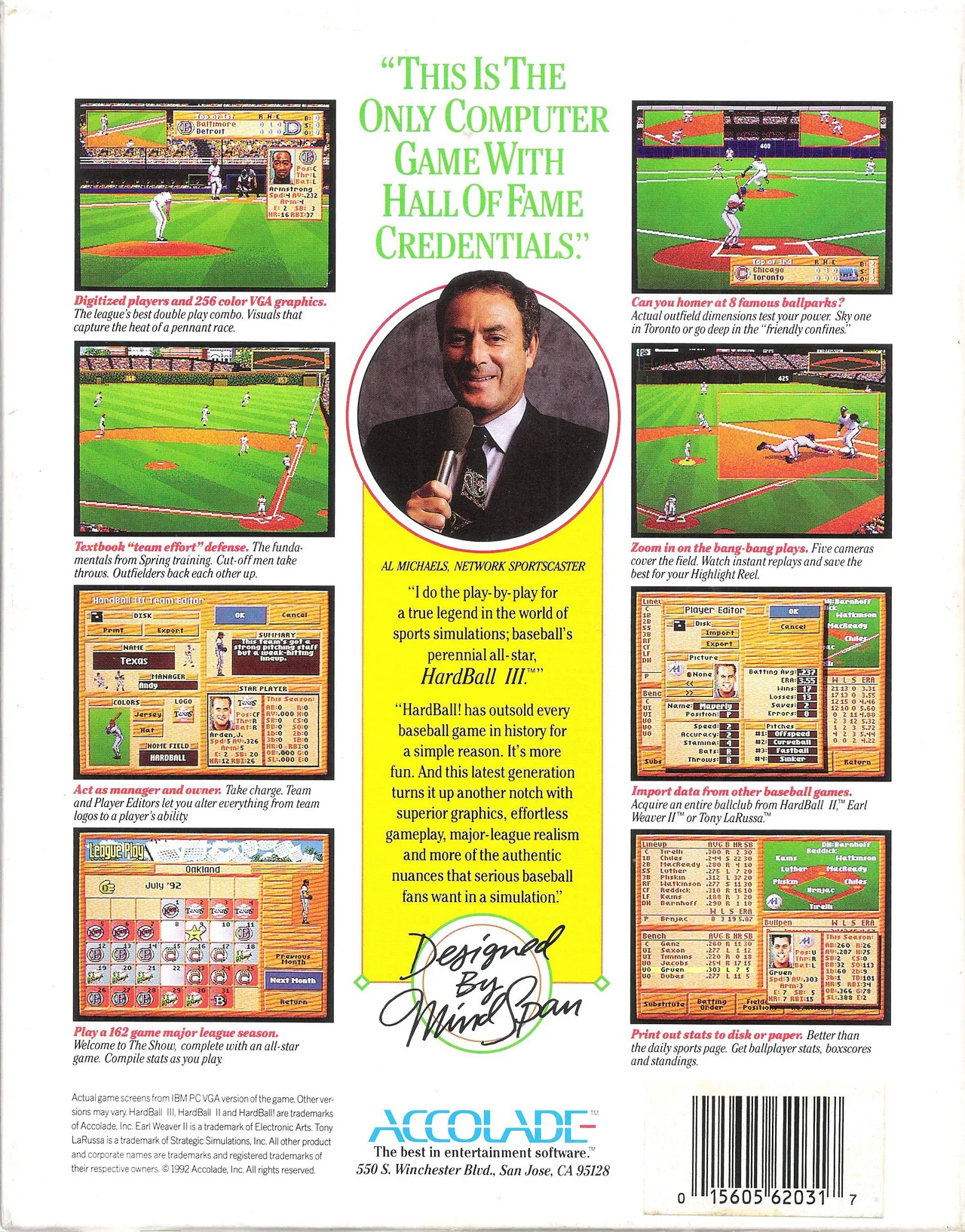
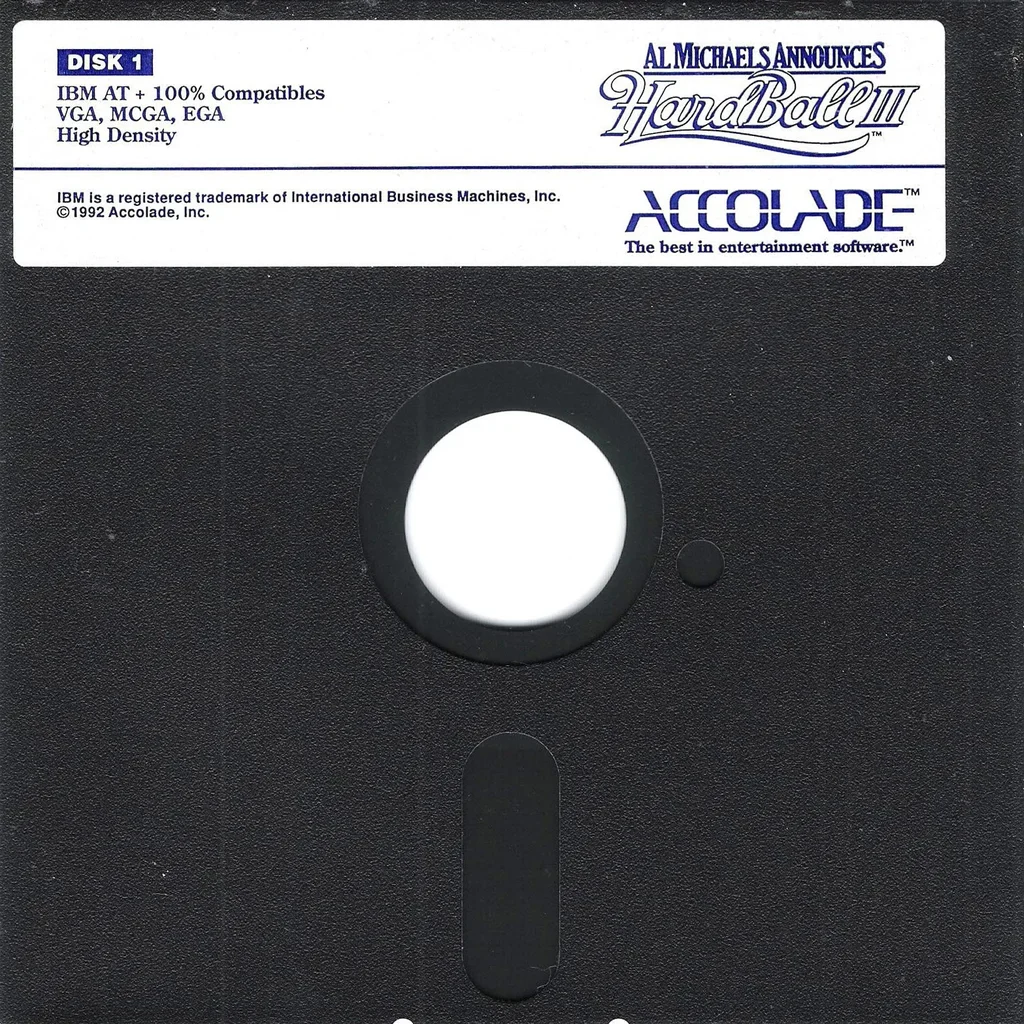
Online version of HardBall III for PC DOS. A baseball game developed by MindSpan for Accolade, released for PC DOS in 1992 and for the Sega Genesis and SNES in 1993 and 1994. Every game comes with digitised play-by-play by sportscaster Al Michaels. The duel of pitcher and batter is shown up close: the pitcher picks the pitch and its location, the batter the swing and the zone, and once the ball is hit the view switches to the whole field. There are exhibition games and full seasons with playoffs, an editor for players, teams and logos, and a mode for those who only want to manage. Two data disks added real players and more ballparks on the PC.
Game details
Other platforms online 2
You can play HardBall III online also in a versions forrating (0 users voted)
Covers - Box Art
IBM PC with MS-DOS
Online emulated version of HardBall III was originally developed for the IBM PC and compatible computers,
with MS DOS - Microsoft Disk Operating System. It is an OS for x86-based personal computers mostly developed by Microsoft and released in 1981 as PC DOS 1.0.
MS-DOS was targeted at Intel 8086 processors running on computer hardware using floppy disks to store and access not only the operating system, but application software and user data as well.
Progressive version releases delivered support for other mass storage media in ever greater sizes and formats, along with added feature support for newer processors
and rapidly evolving computer architectures. Ultimately, it was the key product in Microsoft's development from a programming language company to a diverse software
development firm, providing the company with essential revenue and marketing resources. It was also the underlying basic operating system on which early versions of Windows ran as a GUI.