John Madden Football II for PC DOS 3D
PC DOS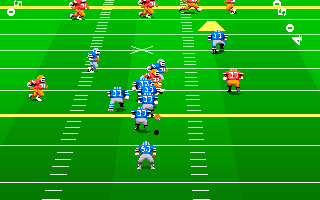
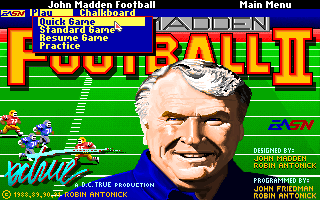
In the main menu hold the left mouse button on PLAY, drag down to an item and release it. Enter confirms OK in dialogs, keypad + is the mouse button (kickoff, play summaries, Enter does not kick off). Keypad 7 8 9 4 6 1 2 3 give the directions, F1 turns the keypad joystick on or off. Esc opens the menu and pauses, Ctrl+S toggles the sound.
Game controls in browser
Show Controller & SystemClick on play DOS game now button first to load the game and run it inside the DOSBox emulator.
Manuals, maps & hints 5
Original manuals, maps, hints and other materials for John Madden Football II, on OldGames.sk:
John Madden Football II
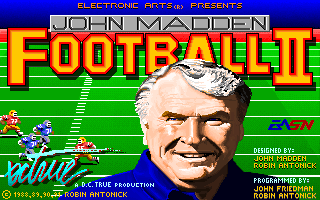
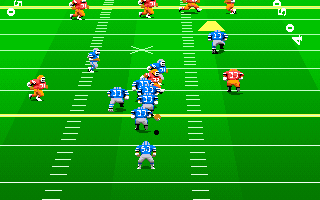
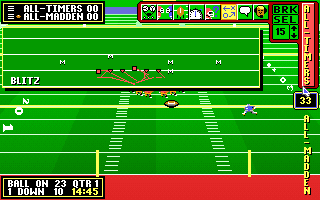
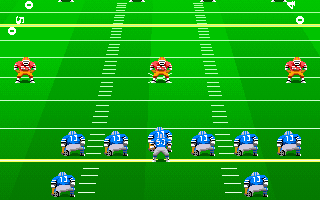
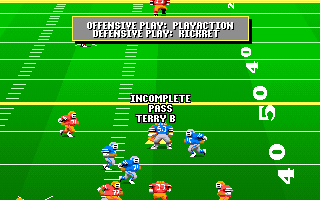
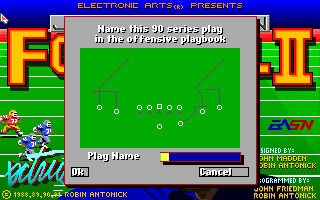
Online version of John Madden Football II for PC DOS. The sequel to the coaching-minded American football game John Madden Football, released by Electronic Arts in 1991 for PC DOS. Robin Antonick and John Madden are again credited with the design, but this time the game got VGA graphics, AdLib and Roland music and digitised sound effects. Plays come from 3 playbooks, an offensive one and 2 defensive ones, annotated by Madden, and your own can be drawn in the Chalkboard editor. Besides the fictional teams it includes 28 teams from the 1990 season, but without an NFL licence they have only city names and nameless players...
Game details
Other platforms online
John Madden Football II is currently playable only in version for PC DOS.rating (1 users voted)
Covers - Box Art
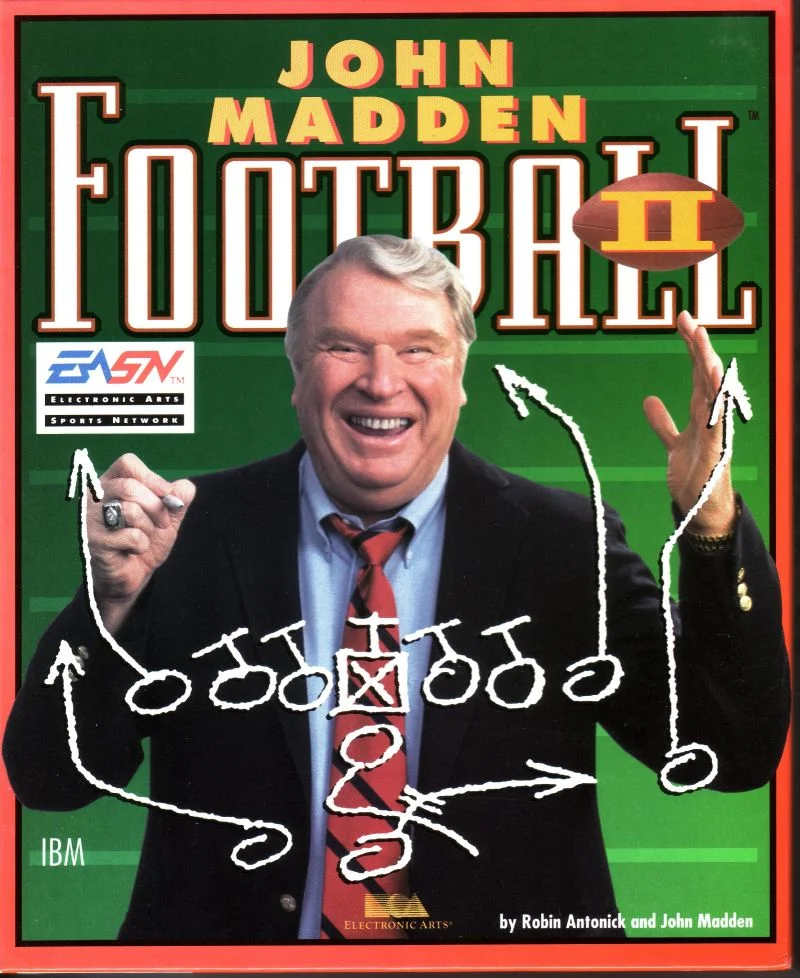
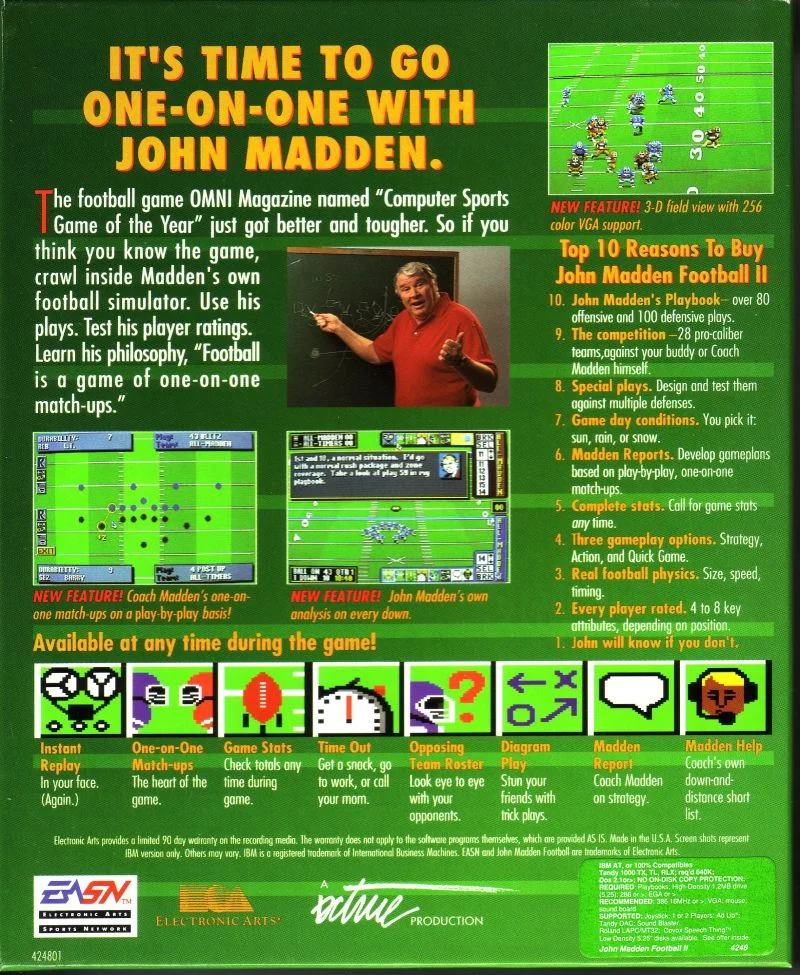
IBM PC with MS-DOS
Online emulated version of John Madden Football II was originally developed for the IBM PC and compatible computers,
with MS DOS - Microsoft Disk Operating System. It is an OS for x86-based personal computers mostly developed by Microsoft and released in 1981 as PC DOS 1.0.
MS-DOS was targeted at Intel 8086 processors running on computer hardware using floppy disks to store and access not only the operating system, but application software and user data as well.
Progressive version releases delivered support for other mass storage media in ever greater sizes and formats, along with added feature support for newer processors
and rapidly evolving computer architectures. Ultimately, it was the key product in Microsoft's development from a programming language company to a diverse software
development firm, providing the company with essential revenue and marketing resources. It was also the underlying basic operating system on which early versions of Windows ran as a GUI.