LHX: Attack Chopper for PC DOS 3D
PC DOS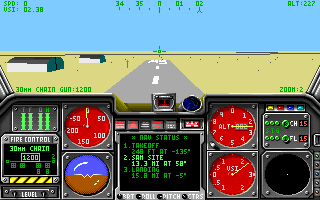
Any number and Enter pass the manual question at the start. The helicopter flies by mouse by default, Esc and Keyboard in the Control menu switch to the keys.
The keypad 8 2 4 6 is the stick, / centres it. The number row sets the collective: 1 0 %, 2 30 %, 3 50 %, 4 70 % and 5 100 % (take-off). Space fires, Enter picks the next target and ' the nearest. F1 is the cockpit, F3 the map, F5 the chase view and T doubles the time rate.
Game controls in browser
Show Controller & SystemClick on play DOS game now button first to load the game and run it inside the DOSBox emulator.
Manuals, maps & hints 4
Original manuals, maps, hints and other materials for LHX: Attack Chopper, on OldGames.sk:
LHX: Attack Chopper
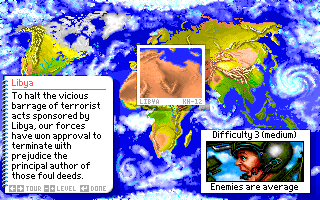
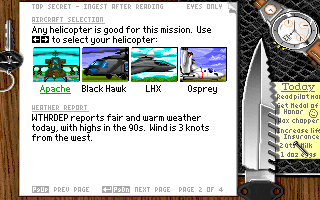
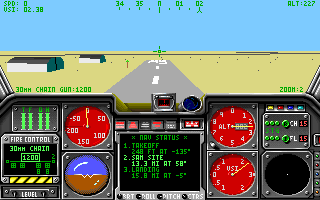
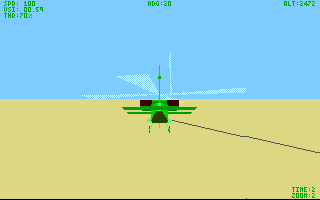
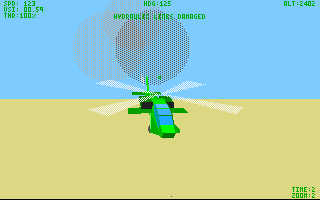
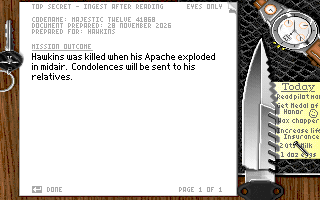
Online version of LHX: Attack Chopper for PC DOS. A combat helicopter simulator designed and programmed by Brent Iverson, published by Electronic Arts for the PC in 1990 and in 1992 for the Sega Genesis. As a US Army pilot the player flies the Apache and Black Hawk helicopters, the Osprey tilt-rotor and the experimental LHX, which at the time existed only on paper. Missions in Libya, Vietnam and East Germany range from convoy strikes and medevac to POW rescue. The pilot earns promotions and medals, and a harder tour flown in a less sophisticated machine scores more.
Game details
Other platforms online 1
You can play LHX: Attack Chopper online also in a versions forrating (0 users voted)
Covers - Box Art
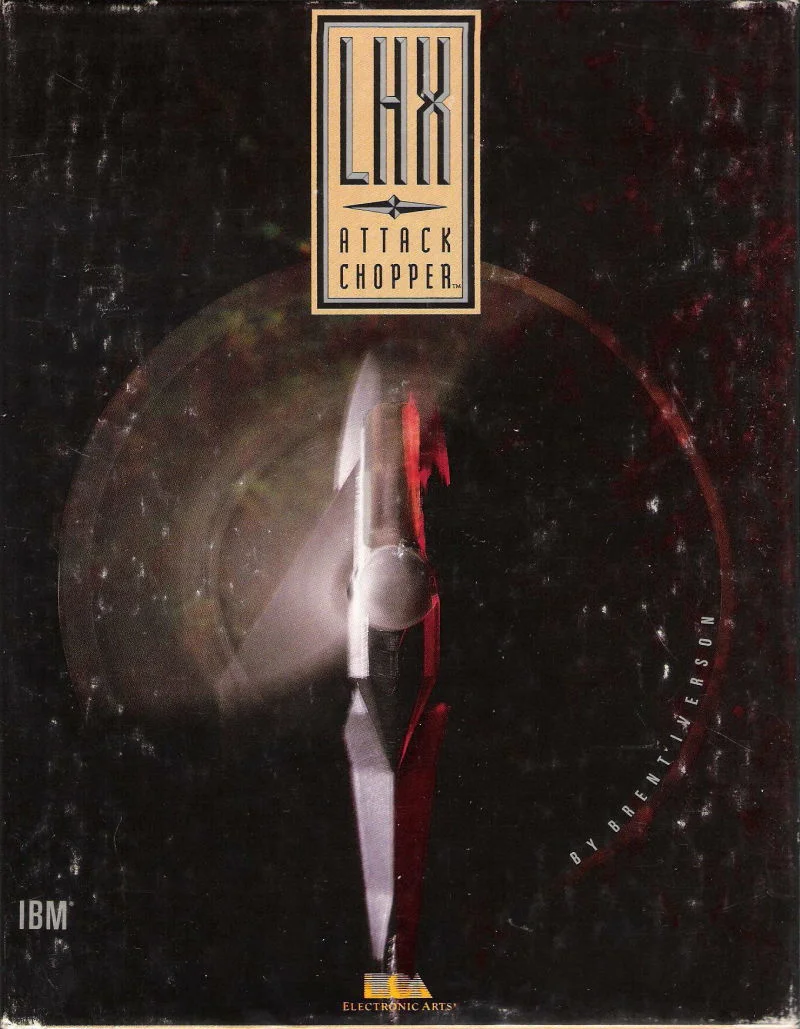
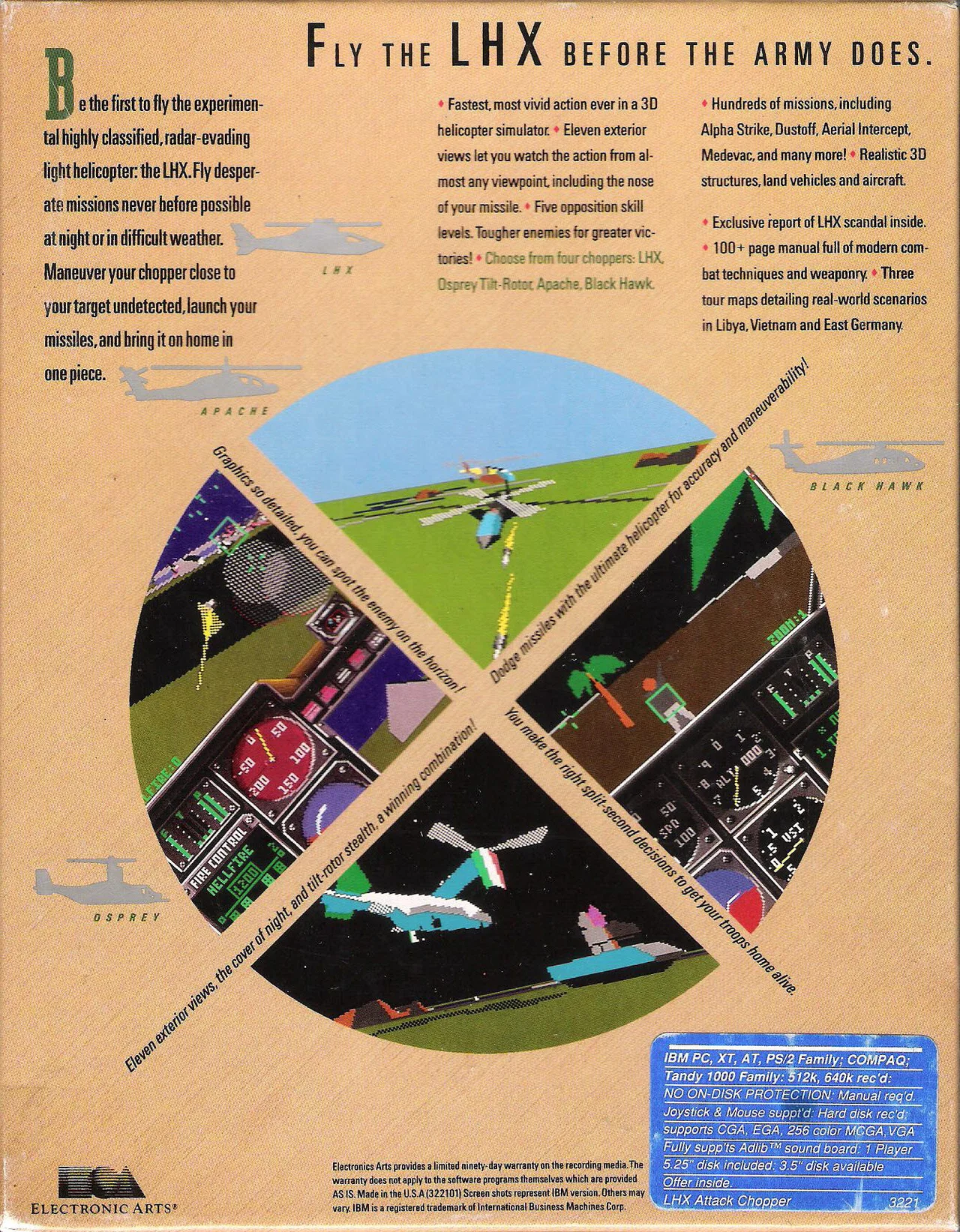
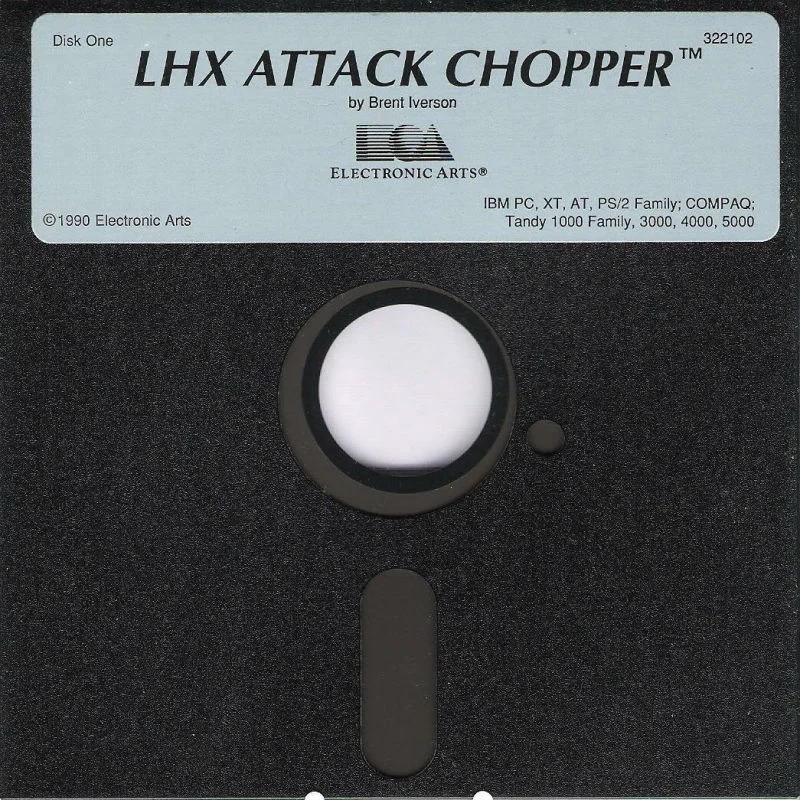
IBM PC with MS-DOS
Online emulated version of LHX: Attack Chopper was originally developed for the IBM PC and compatible computers,
with MS DOS - Microsoft Disk Operating System. It is an OS for x86-based personal computers mostly developed by Microsoft and released in 1981 as PC DOS 1.0.
MS-DOS was targeted at Intel 8086 processors running on computer hardware using floppy disks to store and access not only the operating system, but application software and user data as well.
Progressive version releases delivered support for other mass storage media in ever greater sizes and formats, along with added feature support for newer processors
and rapidly evolving computer architectures. Ultimately, it was the key product in Microsoft's development from a programming language company to a diverse software
development firm, providing the company with essential revenue and marketing resources. It was also the underlying basic operating system on which early versions of Windows ran as a GUI.