Golden Axe Warrior for SEGA Master System 3D
SEGA Master SystemGame controls in browser
Show Controller & SystemClick on play now button first to load the game, to show/change controls settings press click on controller icon in bottom bar of the game window.
Manuals, maps & hints 3
Original manuals, maps, hints and other materials for Golden Axe Warrior, on OldGames.sk:
Golden Axe Warrior
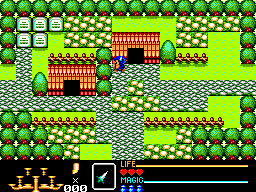
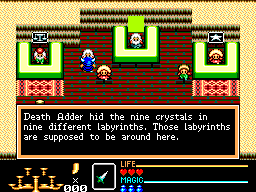
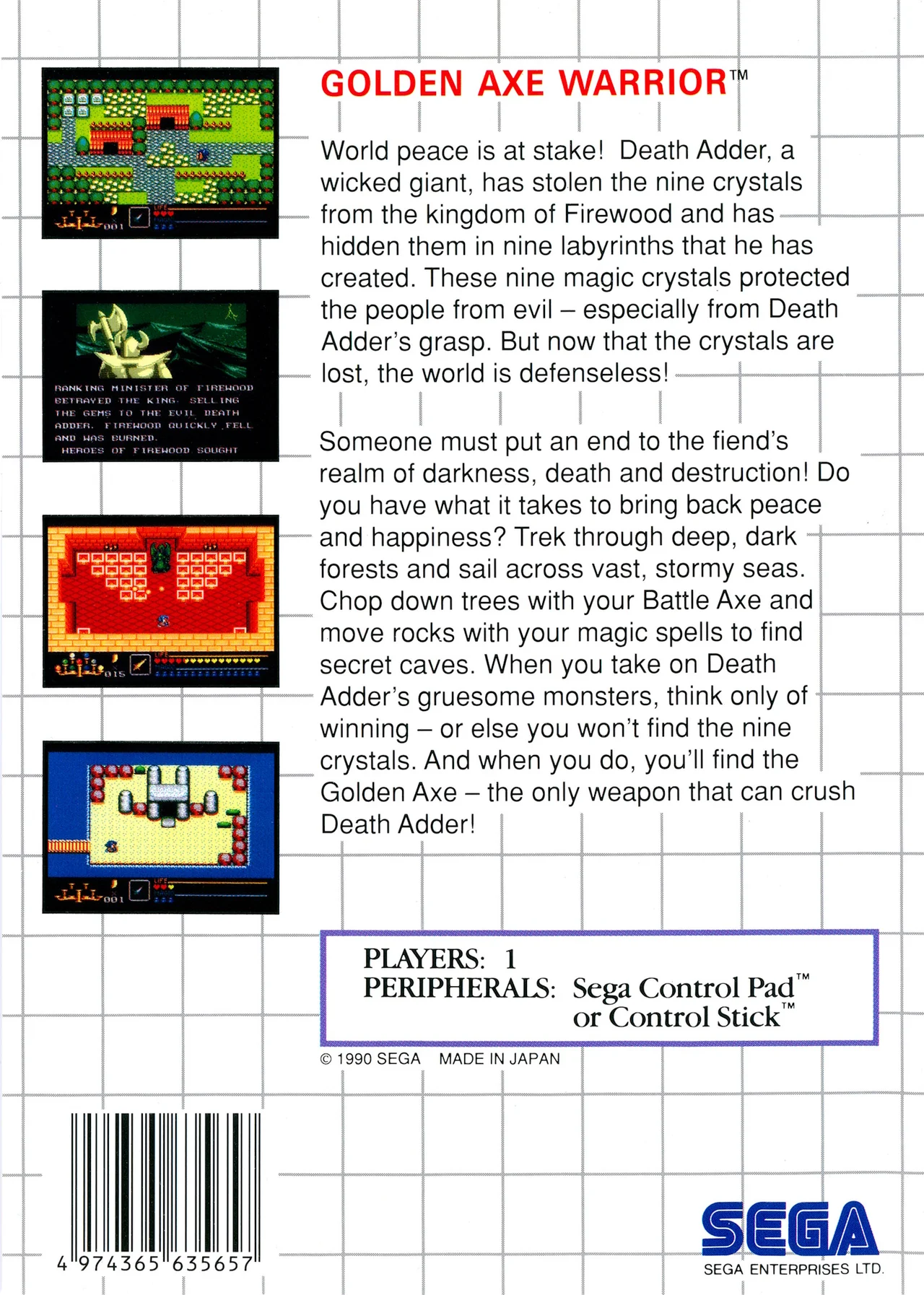
Online version of Golden Axe Warrior for SEGA Master System. An action adventure with RPG elements, released by SEGA for the Master System in 1991 as a spin-off of the arcade Golden Axe series. Instead of a 2-player brawl it offers a lone warrior's quest across a world of 3 continents, with shops, inns, hidden caves and labyrinths in the style of The Legend of Zelda. The task is to recover 9 crystals stolen by Death Adder and find the golden axe, the only weapon that can harm him...
Game details
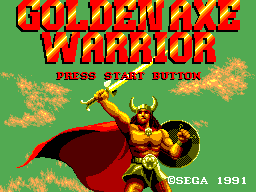
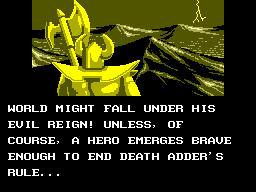
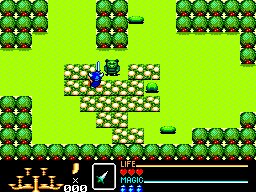
Other platforms online
Golden Axe Warrior is currently playable only in version for SEGA Master System.rating (0 users voted)
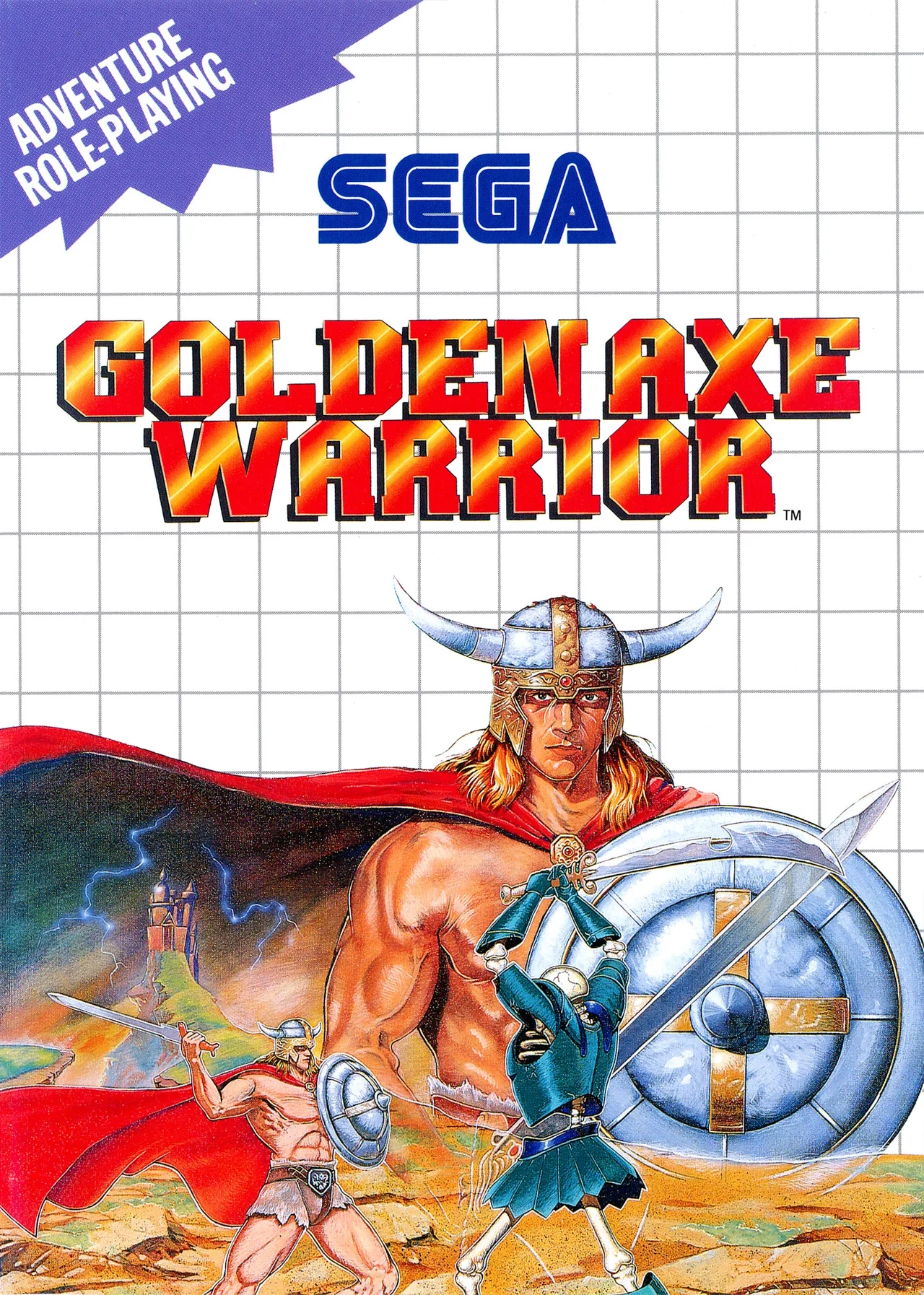
Covers - Box Art

Sega Master System Console
Online emulated version of Golden Axe Warrior was originally developed for the Sega Master System a third-generation
8-bit home video game console manufactured by Sega. It was originally a remodeled export version of the Sega Mark III, the third iteration of the SG-1000 series of consoles,
which was released in Japan in 1985 and featured enhanced graphical capabilities over its predecessors. The Master System launched in North America in 1986,
followed by Europe in 1987.
The original Master System models use both cartridges and a credit card-sized format known as Sega Cards. Accessories for the consoles include a light gun and 3D glasses
that work with a range of specially designed games. The later Master System II redesign removed the card slot, turning it into a strictly cartridge-only system
and is incompatible with the 3D glasses.
The Master System's main CPU is a Zilog Z80A, an 8-bit processor running at 4 MHz. It has 8 kB of ROM, 8 kB of RAM and 16 kB of video RAM. Video is provided through an RF switch and displays at a resolution of 256 × 192 pixels and up to 32 colors at one time from a total palette of 64 colors; the graphics chip was designed by Sega for the Mark III.